The Constellations
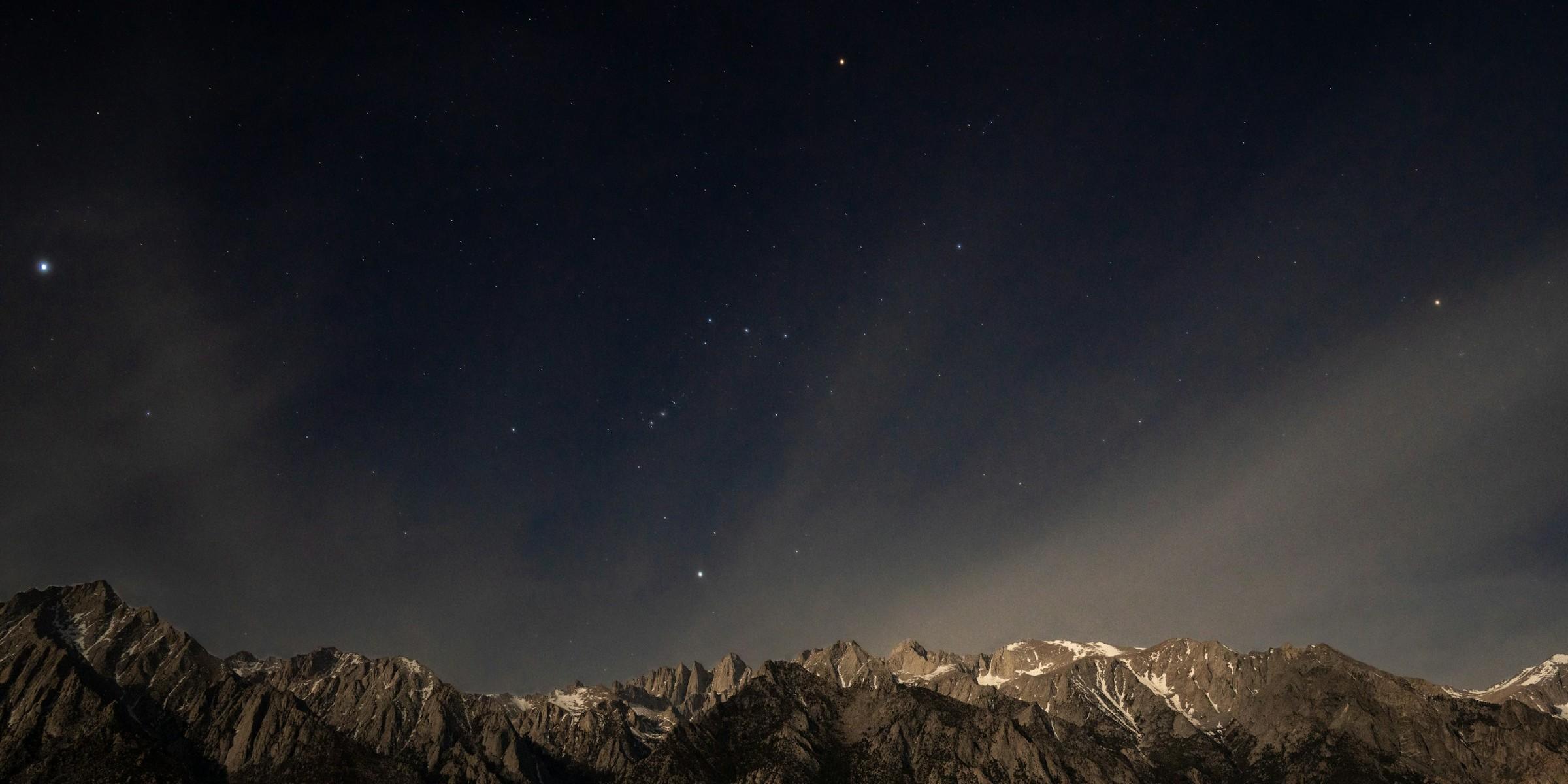
Orion constellation - Photo by john ko on Unsplash
Contents
Why Are There Constellations?
Ever since people first wandered the Earth, great significance has been given to objects seen in the sky. Ancient peoples noticed that the rising and setting points of the Sun and the Moon, as well as the visibility of stars, change throughout the year. Therefore, all cultures have long traditions of using astronomy as a tool of survival. They developed astronomical methods for navigation in space and time, in particular, to determine their calendars: to measure equinoxes and solstices and to predict the seasonal behaviour of nature. For the Inuit in the far north, this was the prediction of the return of the Sun; for the Egyptians, it was the flood of the Nile; for the Babylonians and others in the monsoon zone, it was the predominant direction of the wind; and for the Aboriginal Australians, it was the emu’s breeding cycle.
How Humans Made Constellations
The images interpreted by cultural groups from patterns of stars depend on the natural environment and cultural habits: only people who have seen emus can interpret such a bird in an arbitrary pattern in the sky. The effect of human cognition that makes us see patterns in arbitrary configurations (like clouds, mountain chains, or stars) is studied by gestalt psychology. Several network analysis studies have shown that the stellar patterns were grouped in similar ways all over the Earth (Bucur 2021, 2022; Kemp et al., 2022). However, humans are also social animals and love to exchange. As we invented languages and symbols, we learned to exchange knowledge and communicate with others of our species. Observations of the skyscape and celestial patterns have always been exchanged among people of various cultures.
Practical Application
In particular, the Chinese and the Inca both grouped their constellations according to the four seasons. In the case of the Inca, each season was accompanied by “dark constellations”: constellations formed from the dark clouds in the Milky Way, not from stars (Gullberg et al., 2020; e.g., Figure 1). The animals seen in this procession indicate events in nature: when the constellation of the “Llama nursing its offspring” appears, llama babies are born, when Fox appears, fox babies are born, when then the constellations of the Snake and the Toad appear, it is the wet season, and so on.
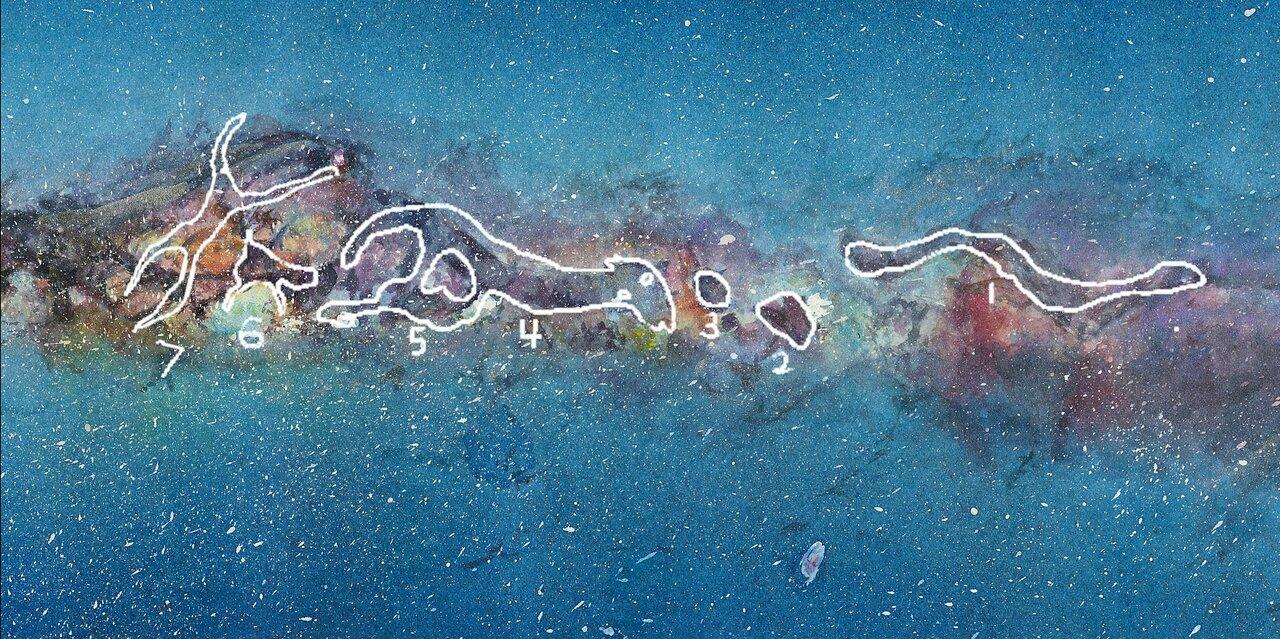
The Dark Constellations of the Inca – right to left: (1) Machacuay, (2) Hanp’atu, (3) Yutu, (4) Yacana, (5) Uñallamacha, (6) Atoq, and (7) Michij runa.
Art by Jessica Gullberg, constellations inspired by Gary Urton and Miguel Araoz Cartagena. Image Credit: Gullberg et al. (2020, fig. 4), reworked by Gullberg and Gullberg (2022).
The ancient Chinese constructed tiny constellations, some consisting of only one to three stars. However, these small constellations were grouped into super-constellations, covering extended areas and dividing the sky roughly into quarters. Their names are not similarly directly linked to nature as the Inca constellations, though they are also rooted in nature-based belief systems.
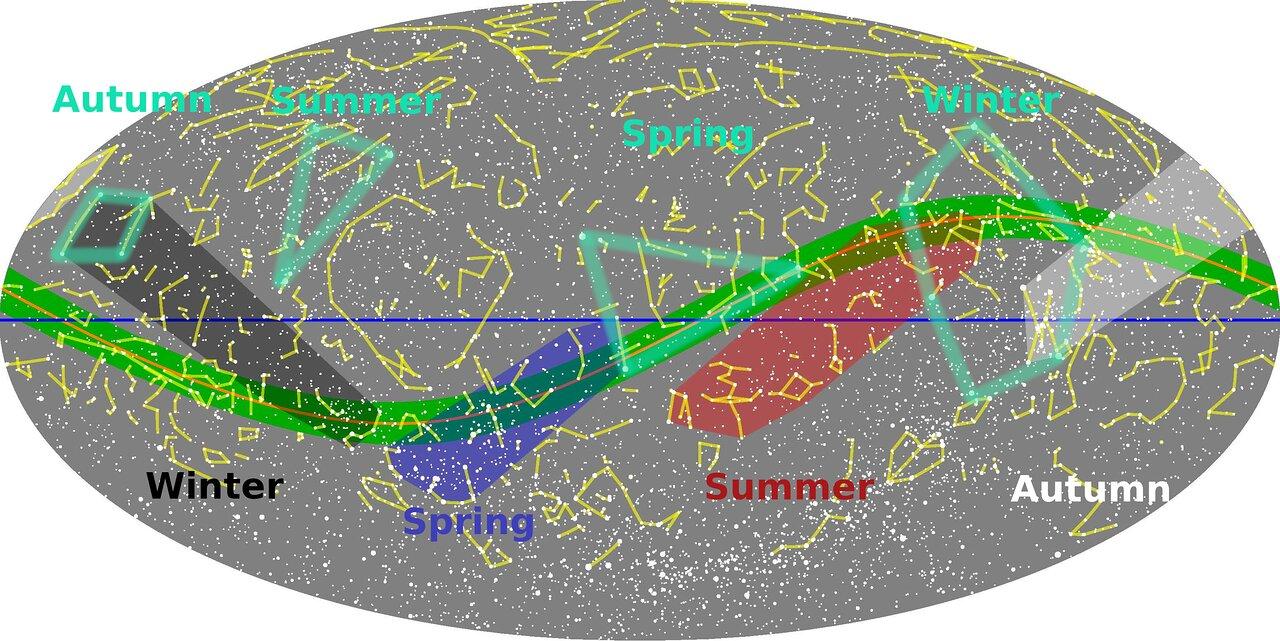
Some of the common Chinese asterisms (yellow lines) are grouped into the super-constellations Dark Warrior (winter), Azure Dragon (spring), Vermilion Bird (summer), and White Tiger (autumn). Here they are contrasted with the modern European asterisms (cyan) of the Autumn Square, the Summer Triangle, the Spring Triangle and the Winter Hexagon. Image credit: Susanne M Hoffmann.
The 88 IAU Constellations
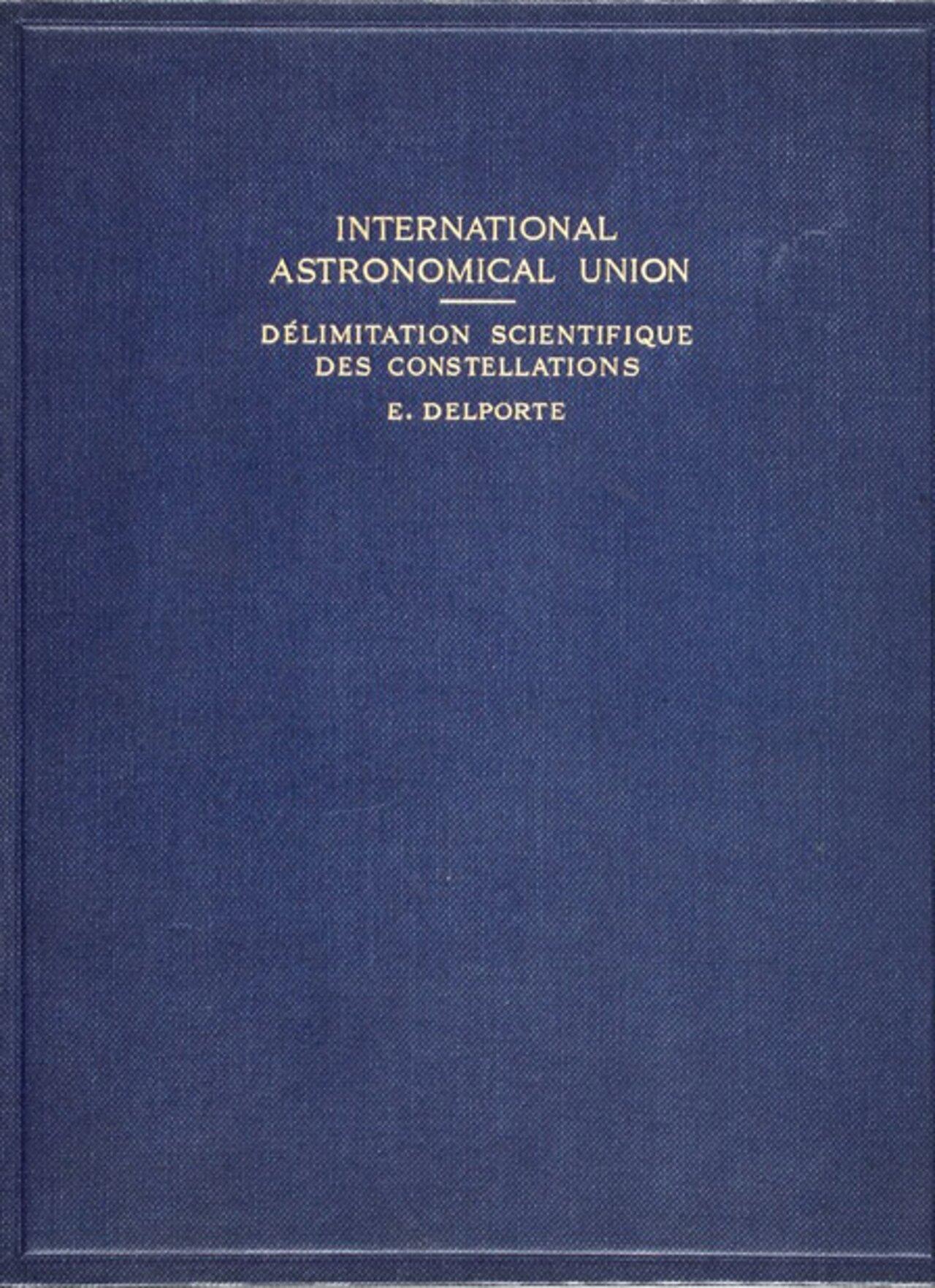
Front cover of the IAU book edition: Delporte’s Délimitation scientifique des constellations. Image Credit: Michael E. Bakich library
By the 19th century, over a hundred constellations could be found on various star charts since there was nothing to stop astronomers from inventing new figures between the existing ones, which they often did to flatter a patron or monarch. In the 19th century, there were several changes in the scientific method and research focus. Many variable stars were discovered, stellar transients were investigated, and astrophysics with electric measurements of brightnesses and spectra of stars was developed. With the high number of investigated stars, new nomenclatures emerged, many of them relying on the constellation names. Therefore, one of the IAU’s first tasks after its formation was to define an internationally agreed set of constellations. At its first General Assembly held in Rome in 1922, the IAU’s Commission on Notations and Units agreed on a list of 88 constellations covering the entire sky, with three-letter abbreviations of their Latin names. These are the 88 IAU constellations that are still recognised today, as described in more detail below.
But these constellations still lacked officially defined boundaries, and this was the next task to be tackled. At the second IAU General Assembly held in Cambridge, England, in 1925, Eugène Delporte of the Royal Observatory in Brussels presented proposals for a clearly defined system of constellation boundaries drawn along lines of right ascension and declination, the celestial equivalents of longitude and latitude on Earth. The IAU took up the suggestion and appointed Delporte to prepare official boundaries with the specific requirement that all known variable-brightness stars should remain within the constellation to which they had already been assigned. This resulted in some awkward-looking outlines.
Delporte’s new boundaries were approved by the IAU at its General Assembly at Leiden in 1928, and the results were published in 1930 in Délimitation Scientifique des Constellations along with an accompanying Atlas Céleste. So constellations, which started out as imaginary patterns of stars, became scientifically defined areas of sky. Nowadays, when astronomers say something is “in” a given constellation, they mean it is simply within those defined boundaries, not that it is part of any star pattern.
Constellation Figures
In contrast to the historical and Indigenous concepts of constellations as patterns of light points in the night sky, such as the Chinese star chains or the lists of stars under a common headline in historical star catalogues, the IAU defines a constellation as an area in the sky surrounded by its boundary. The boundaries indicated by sky coordinates are the defining quantity. Note that these boundaries, though the standard recognised by the IAU, are not necessarily universally utilised: many cultures have had their own asterisms for hundreds or thousands of years and continue to use them.
In star maps or charts, it is common to mark line patterns representing the shapes that give the name to the constellations. For IAU constellations, no stick figures or figurative painting styles are formally defined. Consequently, the same constellation may have several variants in its visual representation.
In addition to the constellation line patterns, there are also asterism line patterns. Asterisms are distinct from constellations. They are patterns or shapes of stars that are not related to the known constellations but are widely recognised. Examples include: the seven bright stars in Ursa Major, known as “the Plough” in Europe, “the Big Dipper” in America and “the Northern Dipper” traditionally in China; and the “Summer Triangle”, a large triangle seen in the summer and autumn night sky of the northern hemisphere, composed of the bright stars (from three different constellations) Altair, Deneb and Vega. Asterisms can even consist of star clusters (like “the Seven Sisters”, or the Pleiades cluster), groups of star clusters (like “the Golden Gate of the Ecliptic” consisting of the Pleiades and Hyades clusters) or of only one bright star (like the Greek star Capella or the Chinese single star-asterisms).
It should be realised that the groups of stars that made up the original constellation patterns have, in most cases, no physical connection with each other. All constellations are a matter of perspective. They are simply our Earth-based interpretation of two-dimensional star patterns on the celestial sphere, composed of stars of various different brightnesses and at widely differing distances from Earth.
IAU Constellation Names
Each Latin constellation name has two forms: the nominative, used when talking about the constellation itself, and the genitive, or possessive, used in star names. For instance, Hamal, the brightest star in the constellation Aries (nominative form), is also called Alpha Arietis (genitive form), meaning literally “the alpha of Aries”.
The table below includes the Latin names for each IAU constellation, their abbreviated names and a chart showing their boundaries. These are a mix of the ancient Greek patterns recorded by Ptolemy in addition to some more “modern” patterns observed later by astronomers.
Pronunciation of Constellation Names
Experienced astronomers, both professional and amateur, may pronounce constellation names differently but have no trouble understanding each other. There is no single correct way to pronounce a constellation name, and several sources address the issue. See, for example:
Charts and tables
The charts below were produced in collaboration with Sky & Telescope magazine (Roger Sinnott and Rick Fienberg). Alan MacRobert's constellation patterns, drawn in green on the charts, were influenced by those of H. A. Rey but, in many cases, were adjusted to preserve earlier traditions. Each chart was produced using the J2000 epoch. The images are released under the Creative Commons Attribution 4.0 International license.
Quick links : And , Ant, Aps, Aqr, Aql, Ara, Ari, Aur, Boo, Cae, Cam, Cnc, CVn, CMa, CMi, Cap, Car, Cas, Cen, Cep, Cet, Cha, Cir, Col, Com, CrA, CrB, Crv, Crt, Cru, Cyg, Del, Dor, Dra, Equ, Eri, For, Gem, Gru, Her, Hor, Hya, Hyi, Ind, Lac, Leo, LMi, Lep, Lib, Lup, Lyn, Lyr, Men, Mic, Mon, Mus, Nor, Oct, Oph, Ori, Pav, Peg, Per, Phe, Pic, Psc, PsA, Pup, Pyx, Ret, Sge, Sgr, Sco, Scl, Sct, Ser, Sex, Tau, Tel, Tri, TrA, Tuc, UMa, UMi, Vel, Vir, Vol, Vul , Chart text legend
Charts Graphical Legend
Charts
Name /
Pronunciation |
Abbr. |
English Name |
Genitive /
Pronunciation |
Downloads |
|
Andromeda
an-DRAH-mih-duh |
And |
the Chained Maiden |
Andromedae
an-DRAH-mih-dee |
Constellation charts
GIF (117 KB)
PDF (829 KB)
TIF
Constellation boundary
TXT (2 KB)
|
|
Antlia
ANT-lee-uh |
Ant |
the Air Pump |
Antliae
ANT-lee-ee |
Constellation charts
GIF (111 KB)
PDF (815 KB)
TIF
Constellation boundary
TXT (1 KB)
|
Apus
APE-us, APP-us
|
Aps |
the Bird of Paradise |
Apodis
APP-oh-diss
|
Constellation charts
GIF (155 KB)
PDF (836 KB)
TIF
Constellation boundary
TXT (1 KB)
|
|
Aquarius
uh-QUAIR-ee-us
|
Aqr |
the Water Bearer |
Aquarii
uh-QUAIR-ee-eye
|
Constellation charts
GIF (124 KB)
PDF (879 KB)
TIF
Constellation boundary
TXT (1 KB)
|
|
Aquila
ACK-will-uh, uh-QUILL-uh
|
Aql |
the Eagle |
Aquilae
ACK-will-ee, uh-QUILL-ee
|
Constellation charts
GIF (108 KB)
PDF (820KB)
TIF
Constellation boundary
TXT (1 KB)
|
|
Ara
AIR-uh, AR-uh
|
Ara |
the Altar |
Arae
AIR-ee, AR-ee
|
Constellation charts
GIF (114 KB)
PDF (807 KB)
TIF
Constellation boundary
TXT (1 KB)
|
|
Aries
AIR-eez, AIR-ee-yeez
|
Ari |
the Ram |
Arietis
uh-RYE-ih-tiss
|
Constellation charts
GIF (118 KB)
PDF (805 KB)
TIF
Constellation boundary
TXT (1 KB)
|
|
Auriga
aw-RYE-guh
|
Aur |
the Charioteer |
Aurigae
aw-RYE-ghee
|
Constellation charts
GIF (122 KB)
PDF (381 KB)
TIF
Constellation boundary
TXT (1 KB)
|
|
Boötes
bo-OH-teez
|
Boo |
the Herdsman |
Boötis
bo-OH-tiss
|
Constellation charts
GIF (147 KB)
PDF (823KB)
TIF
Constellation boundary
TXT (1 KB)
|
|
Caelum
SEE-lum
|
Cae |
the Engraving Tool |
Caeli
SEE-lye
|
Constellation charts
GIF (97 KB)
PDF (780 KB)
TIF
Constellation boundary
TXT (1 KB)
|
|
Camelopardalis
cuh-MEL-oh- PAR-duh-liss
|
Cam |
the Giraffe |
Camelopardalis
cuh-MEL-oh- PAR-duh-liss
|
Constellation charts
GIF (156 KB)
PDF (888 KB)
TIF
Constellation boundary
TXT (2 KB)
|
|
Cancer
CAN-ser
|
Cnc |
the Crab |
Cancri
CANG-cry
|
Constellation charts
GIF (108 KB)
PDF (814 KB)
TIF
Constellation boundary
TXT (1 KB)
|
|
Canes Venatici
CANE-eez (CAN-eez) ve-NAT-iss-eye
|
CVn |
the Hunting Dogs |
Canum Venaticorum
CANE-um (CAN-um) ve-nat-ih-COR-um
|
Constellation charts
GIF (106 KB)
PDF (790 KB)
TIF
Constellation boundary
TXT (1 KB)
|
|
Canis Major
CANE-iss (CAN-iss) MAY-jer
|
CMa |
the Great Dog |
Canis Majoris
CANE-iss (CAN-iss) muh-JOR-iss
|
Constellation charts
GIF (134 KB)
PDF (849 KB)
TIF
Constellation boundary
TXT (1 KB)
|
|
Canis Minor
CANE-iss (CAN-iss) MY-ner
|
CMi |
the Lesser Dog |
Canis Minoris
CANE-iss (CAN-iss) mih-NOR-iss
|
Constellation charts
GIF (83 KB)
PDF (766 KB)
TIF
Constellation boundary
TXT (1 KB)
|
|
Capricornus
CAP-rih-CORN-us
|
Cap |
the Sea Goat |
Capricorni
CAP-rih-CORN-eye
|
Constellation charts
GIF (98 KB)
PDF (818 KB)
TIF
Constellation boundary
TXT (1 KB)
|
|
Carina
cuh-RYE-nuh, cuh-REE-nuh
|
Car |
the Keel |
Carinae
cuh-RYE-nee, cuh-REE-nee
|
Constellation charts
GIF (143 KB)
PDF (882 KB)
TIF
Constellation boundary
TXT (1 KB)
|
|
Cassiopeia
CASS-ee-uh-PEE-uh
|
Cas |
the Seated Queen |
Cassiopeiae
CASS-ee-uh-PEE-ye
|
Constellation charts
GIF (139 KB)
PDF (846 KB)
TIF
Constellation boundary
TXT (1 KB)
|
|
Centaurus
sen-TOR-us
|
Cen |
the Centaur |
Centauri
sen-TOR-eye
|
Constellation charts
GIF (178 KB)
PDF (549 KB)
TIF
Constellation boundary
TXT (1 KB)
|
|
Cepheus
SEE-fyoos, SEE-fee-us, SEF-ee-us
|
Cep |
the King |
Cephei
SEE-fee-eye, SEF-ee-eye
|
Constellation charts
GIF (200 KB)
PDF (873 KB)
TIF
Constellation boundary
TXT (2 KB)
|
|
Cetus
SEE-tus
|
Cet |
the Sea Monster |
Ceti
SEE-tie
|
Constellation charts
GIF (122 KB)
PDF (873 KB)
TIF
Constellation boundary
TXT (1 KB)
|
|
Chamaeleon
cuh-MEAL-yun, cuh-MEAL-ee-un
|
Cha |
the Chameleon |
Chamaeleontis
cuh-MEAL-ee-ON-tiss
|
Constellation charts
GIF (183 KB)
PDF (834 KB)
TIF
Constellation boundary
TXT (1 KB)
|
|
Circinus
SER-sin-us
|
Cir |
the Drawing Compass |
Circini
SER-sin-eye
|
Constellation charts
GIF (131 KB)
PDF (818 KB)
TIF
Constellation boundary
TXT (1 KB)
|
|
Columba
cuh-LUM-buh
|
Col |
the Dove |
Columbae
cuh-LUM-bee
|
Constellation charts
GIF (99 KB)
PDF (797 KB)
TIF
Constellation boundary
TXT (1 KB)
|
|
Coma Berenices
COE-muh BER-uh-NICE-eez
|
Com |
the Bernice's Hair |
Comae Berenices
COE-mee BER-uh-NICE-eez
|
Constellation charts
GIF (101 KB)
PDF (788 KB)
TIF
Constellation boundary
TXT (1 KB)
|
|
Corona Australis
cuh-ROE-nuh aw-STRAL-iss3
|
CrA |
the Southern Crown |
Coronae Australis
cuh-ROE-nee aw-STRAL-iss3
|
Constellation charts
GIF (107 KB)
PDF (787 KB)
TIF
Constellation boundary
TXT (1 KB)
|
|
Corona Borealis
cuh-ROE-nuh bor-ee-AL-iss3
|
CrB |
the Northern Crown |
Coronae Borealis
cuh-ROE-nee bor-ee-AL-iss3
|
Constellation charts
GIF (89 KB)
PDF (771 KB)
TIF
Constellation boundary
TXT (1 KB)
|
|
Corvus
COR-vus
|
Crv |
the Crow |
Corvi
COR-vye
|
Constellation charts
GIF (74 KB)
PDF (763 KB)
TIF
Constellation boundary
TXT (1 KB)
|
|
Crater
CRAY-ter
|
Crt |
the Cup |
Crateris
cruh-TEE-riss
|
Constellation charts
GIF (75 KB)
PDF (787 KB)
TIF
Constellation boundary
TXT (1 KB)
|
|
Crux
CRUCKS, CROOKS
|
Cru |
the Southern Cross |
Crucis
CROO-siss
|
Constellation charts
GIF (119 KB)
PDF (811 KB)
TIF
Constellation boundary
TXT (1 KB)
|
|
Cygnus
SIG- SIG-nu
|
Cyg |
the Swan |
Cygni
SIG-nye
|
Constellation charts
GIF (174 KB)
PDF (866 KB)
TIF
Constellation boundary
TXT (1 KB)
|
|
Delphinus
del-FINE-us, del-FIN-us
|
Del |
the Dolphin |
Delphini
del-FINE-eye, del-FIN-eye
|
Constellation charts
GIF (81 KB)
PDF (767 KB)
TIF
Constellation boundary
TXT (1 KB)
|
|
Dorado
duh-RAH-do
|
Dor |
the Swordfish |
Doradus
duh-RAH-dus
|
Constellation charts
GIF (108 KB)
PDF (795 KB)
TIF
Constellation boundary
TXT (1 KB)
|
|
Draco
DRAY-co
|
Dra |
the Dragon |
Draconis
druh-CONE-iss
|
Constellation charts
GIF (153 KB)
PDF (898 KB)
TIF
Constellation boundary
TXT (2 KB)
|
|
Equuleus
eh-QUOO-lee-us
|
Equ |
the Little Horse |
Equulei
eh-QUOO-lee-eye
|
Constellation charts
GIF (69 KB)
PDF (749 KB)
TIF
Constellation boundary
TXT (1 KB)
|
|
Eridanus
ih-RID-un-us
|
Eri |
the River |
Eridani
ih-RID-un-eye
|
Constellation charts
GIF (167 KB)
PDF (941 KB)
TIF
Constellation boundary
TXT (2 KB)
|
|
Fornax
FOR-naks
|
For |
the Furnace |
Fornacis
for-NAY-siss
|
Constellation charts
GIF (108 KB)
PDF (811 KB)
TIF
Constellation boundary
TXT (1 KB)
|
|
Gemini
JEM-uh-nye, JEM-uh-nee
|
Gem |
the Twins |
Geminorum
JEM-uh-NOR-um
|
Constellation charts
GIF (122 KB)
PDF (832 KB)
TIF
Constellation boundary
TXT (1 KB)
|
|
Grus
GRUSS, GROOS
|
Gru |
the Crane |
Gruis
GROO-iss
|
Constellation charts
GIF (127 KB)
PDF (829 KB)
TIF
Constellation boundary
TXT (1 KB)
|
|
Hercules
HER-kyuh-leez
|
Her |
the Hercules |
Herculis
HER-kyuh-liss
|
Constellation charts
GIF (156 KB)
PDF (829 KB)
TIF
Constellation boundary
TXT (1 KB)
|
|
Horologium
hor-uh-LOE-jee-um
|
Hor |
the Clock |
Horologii
hor-uh-LOE-jee-eye
|
Constellation charts
GIF (107 KB)
PDF (788 KB)
TIF
Constellation boundary
TXT (1 KB)
|
|
Hydra
HIGH-druh
|
Hya |
the Female Water Snake |
Hydrae
HIGH-dree
|
Constellation charts
GIF (127 KB)
PDF (929 KB)
TIF
Constellation boundary
TXT (2 KB)
|
|
Hydrus
HIGH-drus
|
Hyi |
the Male Water Snake |
Hydri
HIGH-dry
|
Constellation charts
GIF (143 KB)
PDF (821 KB)
TIF
Constellation boundary
TXT (1 KB)
|
|
Indus
IN-dus
|
Ind |
the Indian |
Indi
IN-dye
|
Constellation charts
GIF (131 KB)
PDF (834 KB)
TIF
Constellation boundary
TXT (1 KB)
|
|
Lacerta
luh-SER-tuh
|
Lac |
the Lizard |
Lacertae
luh-SER-tee
|
Constellation charts
GIF (124 KB)
PDF (812 KB)
TIF
Constellation boundary
TXT (1 KB)
|
|
Leo
LEE-oh
|
Leo |
the Lion |
Leonis
lee-OH-niss
|
Constellation charts
GIF (142 KB)
PDF (820 KB)
TIF
Constellation boundary
TXT (1 KB)
|
|
Leo Minor
LEE-oh MY-ner
|
LMi |
the Lesser Lion |
Leonis Minoris
lee-OH-niss mih-NOR-iss
|
Constellation charts
GIF (103 KB)
PDF (799 KB)
TIF
Constellation boundary
TXT (1 KB)
|
|
Lepus
LEEP-us, LEP-us
|
Lep |
the Hare |
Leporis
LEP-or-iss
|
Constellation charts
GIF (94 KB)
PDF (787 KB)
TIF
Constellation boundary
TXT (1 KB)
|
|
Libra
LEE-bruh, LYE-bruh
|
Lib |
the Scales |
Librae
LEE-bree, LYE-bree
|
Constellation charts
GIF (111 KB)
PDF (819 KB)
TIF
Constellation boundary
TXT (1 KB)
|
|
Lupus
LOOP-us
|
Lup |
the Wolf |
Lupi
LOOP-eye
|
Constellation charts
GIF (137 KB)
PDF (857 KB)
TIF
Constellation boundary
TXT (1 KB)
|
|
Lynx
LINKS
|
Lyn |
the Lynx |
Lyncis
LIN-siss
|
Constellation charts
GIF (111 KB)
PDF (796 KB)
TIF
Constellation boundary
TXT (1 KB)
|
|
Lyra
LYE-ruh
|
Lyr |
the Lyre |
Lyrae
LYE-ree
|
Constellation charts
GIF (91 KB)
PDF (776 KB)
TIF
Constellation boundary
TXT (1 KB)
|
|
Mensa
MEN-suh
|
Men |
the Table Mountain |
Mensae
MEN-see
|
Constellation charts
GIF (161 KB)
PDF (827 KB)
TIF
Constellation boundary
TXT (1 KB)
|
|
Microscopium
my-cruh-SCOPE-ee-um
|
Mic |
the Microscope |
Microscopii
my-cruh-SCOPE-ee-eye
|
Constellation charts
GIF (87 KB)
PDF (776 KB)
TIF
Constellation boundary
TXT (1 KB)
|
|
Monoceros
muh-NAH-ser-us
|
Mon |
the Unicorn |
Monocerotis
muh-NAH-ser-OH-tiss
|
Constellation charts
GIF (110 KB)
PDF (821 KB)
TIF
Constellation boundary
TXT (1 KB)
|
|
Musca
MUSS-cuh
|
Mus |
the Fly |
Muscae
MUSS-see, MUSS-kee
|
Constellation charts
GIF (134 KB)
PDF (828 KB)
TIF
Constellation boundary
TXT (1 KB)
|
|
Norma
NOR-muh
|
Nor |
the Carpenter's Square |
Normae
NOR-mee
|
Constellation charts
GIF (118 KB)
PDF (803 KB)
TIF
Constellation boundary
TXT (1 KB)
|
|
Octans
OCK-tanz
|
Oct |
the Octant |
Octantis
ock-TAN-tiss
|
Constellation charts
GIF (140 KB)
PDF (821 KB)
TIF
Constellation boundary
TXT (1 KB)
|
|
Ophiuchus
OFF-ee-YOO-kus, OAF-ee-YOO-kus
|
Oph |
the Serpent Bearer |
Ophiuchi
OFF-ee-YOO-kye, OAF-ee-YOO-kye
|
Constellation charts
GIF (175 KB)
PDF (854 KB)
TIF
Constellation boundary
TXT (2 KB)
|
|
Orion
oh-RYE-un, uh-RYE-un
|
Ori |
the Hunter |
Orionis
or-eye-OH-niss
|
Constellation charts
GIF (181 KB)
PDF (873 KB)
TIF
Constellation boundary
TXT (1 KB)
|
|
Pavo
PAY-vo
|
Pav |
the Peacock |
Pavonis
puh-VOE-niss
|
Constellation charts
GIF (143 KB)
PDF (859 KB)
TIF
Constellation boundary
TXT (1 KB)
|
|
Pegasus
PEG-us-us
|
Peg |
the Winged Horse |
Pegasi
PEG-us-eye
|
Constellation charts
GIF (136 KB)
PDF (868 KB)
TIF
Constellation boundary
TXT (2 KB)
|
|
Perseus
PER-see-us, PER-syoos
|
Per |
the Hero |
Persei
PER-see-eye
|
Constellation charts
GIF (127 KB)
PDF (836 KB)
TIF
Constellation boundary
TXT (1 KB)
|
|
Phoenix
FEE-nix
|
Phe |
the Phoenix
|
Phoenicis
fuh-NICE-iss
|
Constellation charts
GIF (119 KB)
PDF (828 KB)
TIF
Constellation boundary
TXT (1 KB)
|
|
Pictor
PICK-ter
|
Pic |
the Painter's Easel |
Pictoris
pick-TOR-iss
|
Constellation charts
GIF (108 KB)
PDF (794 KB)
TIF
Constellation boundary
TXT (1 KB)
|
|
Pisces
PICE-eez, PISS-eez
|
Psc |
the Fishes |
Piscium
PICE-ee-um, PISH-ee-um
|
Constellation charts
GIF (87 KB)
PDF (859 KB)
TIF
Constellation boundary
TXT (1 KB)
|
|
Piscis Austrinus
PICE-iss (PISS-iss) aw-STRY-nus
|
PsA |
the Southern Fish |
Piscis Austrini
PICE-iss (PISS-iss) aw-STRY-nye
|
Constellation charts
GIF (87 KB)
PDF (778 KB)
TIF
Constellation boundary
TXT (1 KB)
|
|
Puppis
PUP-iss
|
Pup |
the Stern |
Puppis
PUP-iss
|
Constellation charts
GIF (185 KB)
PDF (868 KB)
TIF
Constellation boundary
TXT (1 KB)
|
|
Pyxis
PIX-iss
|
Pyx |
the Mariner Compass |
Pyxidis
PIX-ih-diss
|
Constellation charts
GIF (84 KB)
PDF (775 KB)
TIF
Constellation boundary
TXT (1 KB)
|
|
Reticulum
rih-TICK-yuh-lum
|
Ret |
the Reticle |
Reticuli
rih-TICK-yuh-lye
|
Constellation charts
GIF (107 KB)
PDF (786 KB)
TIF
Constellation boundary
TXT (1 KB)
|
|
Sagitta
suh-JIT-uh
|
Sge |
the Arrow |
Sagittae
suh-JIT-ee
|
Constellation charts
GIF (90 KB)
PDF (773 KB)
TIF
Constellation boundary
TXT (1 KB)
|
|
Sagittarius
SAJ-ih-TARE-ee-us
|
Sgr |
the Archer |
Sagittarii
SAJ-ih-TARE-ee-eye
|
Constellation charts
GIF (163 KB)
PDF (878 KB)
TIF
Constellation boundary
TXT (1 KB)
|
|
Scorpius
SCOR-pee-us
|
Sco |
the Scorpion |
Scorpii
SCOR-pee-eye
|
Constellation charts
GIF (194 KB)
PDF (874 KB)
TIF
Constellation boundary
TXT (1 KB)
|
|
Sculptor
SCULP-ter
|
Scl |
the Sculptor |
Sculptoris
sculp-TOR-iss
|
Constellation charts
GIF (119 KB)
PDF (810 KB)
TIF
Constellation boundary
TXT (1 KB)
|
|
Scutum
SCOOT-um, SCYOOT-um
|
Sct |
the Shield |
Scuti
SCOOT-eye, SCYOOT-eye
|
Constellation charts
GIF (120 KB)
PDF (784 KB)
TIF
Constellation boundary
TXT (1 KB)
|
|
Serpens
SER-punz
|
Ser |
the Serpent |
Serpentis
ser-PEN-tiss
|
Constellation charts (Serpens Caput)
GIF (112 KB)
PDF (780 KB)
TIF
Constellation boundary (Serpens Caput)
TXT (1 KB)
Constellation charts (Serpens Cauda)
GIF (126 KB)
PDF (791 KB)
TIF
Constellation boundary (Serpens Cauda)
TXT (1 KB)
|
|
Sextans
SEX-tunz
|
Sex |
the Sextant |
Sextantis
sex-TAN-tiss
|
Constellation charts
GIF (83 KB)
PDF (782 KB)
TIF
Constellation boundary
TXT (1 KB)
|
|
Taurus
TOR-us
|
Tau |
the Bull |
Tauri
TOR-eye
|
Constellation charts
GIF (115 KB)
PDF (832 KB)
TIF
Constellation boundary
TXT (1 KB)
|
|
Telescopium
tel-ih-SCOPE-ee-um
|
Tel |
the Telescope |
Telescopii
tel-ih-SCOPE-ee-eye
|
Constellation charts
GIF (148 KB)
PDF (834 KB)
TIF
Constellation boundary
TXT (1 KB)
|
|
Triangulum
try-ANG-gyuh-lum
|
Tri |
the Triangle |
Trianguli
try-ANG-gyuh-lye
|
Constellation charts
GIF (89 KB)
PDF (764 KB)
TIF
Constellation boundary
TXT (1 KB)
|
|
Triangulum Australe
try-ANG-gyuh-lum aw-STRAL-ee
|
TrA |
the Southern Triangle |
Trianguli Australis
try-ANG-gyuh-lye aw-STRAL-iss
|
Constellation charts
GIF (124 KB)
PDF (815 KB)
TIF
Constellation boundary
TXT (1 KB)
|
|
Tucana
too-KAY-nuh, too-KAH-nuh
|
Tuc |
the Toucan |
Tucanae
too-KAY-nee, too-KAH-nee
|
Constellation charts
GIF (127 KB)
PDF (806 KB)
TIF
Constellation boundary
TXT (1 KB)
|
|
Ursa Major
ER-suh MAY-jur
|
UMa |
the Great Bear |
Ursae Majoris
ER-suh muh-JOR-iss
|
Constellation charts
GIF (174 KB)
PDF (885 KB)
TIF
Constellation boundary
TXT (1 KB)
|
|
Ursa Minor
ER-suh MY-ner
|
UMi |
the Little Bear |
Ursae Minoris
ER-suh mih-NOR-iss
|
Constellation charts
GIF (135 KB)
PDF (800 KB)
TIF
Constellation boundary
TXT (1 KB)
|
|
Vela
VEE-luh, VAY-luh
|
Vel |
the Sails |
Velorum
vee-LOR-um, vuh-LOR-um
|
Constellation charts
GIF (131 KB)
PDF (850 KB)
TIF
Constellation boundary
TXT (1 KB)
|
|
Virgo
VER-go
|
Vir |
the Maiden |
Virginis
VER-jin-iss
|
Constellation charts
GIF (98 KB)
PDF (831 KB)
TIF
Constellation boundary
TXT (1 KB)
|
|
Volans
VOH-lanz
|
Vol |
the Flying Fish |
Volantis
vo-LAN-tiss
|
Constellation charts
GIF (123 KB)
PDF (812 KB)
TIF
Constellation boundary
TXT (1 KB)
|
|
Vulpecula
vul-PECK-yuh-luh
|
Vul |
the Fox |
Vulpeculae
vul-PECK-yuh-lee
|
Constellation charts
GIF (124 KB)
PDF (805 KB)
TIF
Constellation boundary
TXT (1 KB)
|
Charts Text Legend
Each constellation comes with the following basic information:
Name
Pronunciation of the name
Abbreviation
English Name
Genitive
Pronunciation of the genitive
Chart for screen view (GIF)
Chart for printing (PDF in A4 format)
Boundary coordinates (TXT)
Explanation of the fields:
The name is the Latin name adopted by the International Astronomical Union in 1930.
Pronunciation as described above.
Abbreviation, the standard three-letter form of the Latin name.
The popular name in English.
The genitive is the possessive form of the constellation’s name in Latin. For example, alpha Orionis is the alpha star in the constellation of Orion.
Pronunciation as described above.
Chart in GIF format, 1000 pixels wide.
Chart in PDF format, to be printed in A4 format.
A text file containing a set of coordinates that defines the boundaries of the constellations in the sky. The format is:
HH MM SS.SSSS| DD.DDDDDDD|XXX
Where:
HH MM SS.SSSS defines the right ascension hour, minute and second with J2000 coordinates
DD.DDDDDDD defines the declination with J2000 coordinates
XXX is the abbreviation of the constellation name
| is the separator of the fields
Example:
22 57 51.6729| 35.1682358|AND
More Information
Acknowledgements
We would like to acknowledge the contributions of WGSN President, Susanne M. Hoffmann, IAU OAO Deputy Director, Kelly Blumenthal, WGSN Vice President, Eric Mamajek, and WGSN members Robert H. van Gent, Ian Ridpath and Javier Mejuto (Honduras National Outreach Coordinator), IAU Director of Communications, Lars Lindberg Christensen (originator of the first version of this Theme), and the Head of the IAU Webteam, Raquel Yumi Shida.
References
- Bucur, D. (2022). The network signature of constellation line figures. PLOS ONE, 17(7). https://doi.org/10.1371/journal.pone.0272270
-
Covington, M. A. (2002). Celestial Objects for Modern Telescopes. Cambridge University Press, pp. 80-84.
- Davenhall, A. C.; Leggett, S. K. (1997). Constellation Boundary Data (Davenhall+ 1989). VizieR On-line Data Catalog: VI/49 (Online data: http://vizier.cfa.harvard.edu/viz-bin/VizieR?-source=VI/49 )
- Debarbat, S. (1988). Mapping the sky: past heritage and future directions: proceedings of the 133rd Symposium of the International Astronomical Union, held in Paris, France, 1-5 June 1987. International Astronomical Union. Symposium no. 133, Kluwer Academic Publishers, Dordrecht
- Delporte, E. (1930) Délimitation scientifique des constellations. Cambridge University Press.
- Flanders, T. Constellation Names and Abbreviations. Sky & Telescope, link: http://www.skyandtelescope.com/letsgo/helpdesk/Constellation_Names.html
- Gullberg, Steven R, Hambacher, Duane W., Martín-Lopez, Alejandro, Mejuto, Javier, Munro, Andre M. and Orchiston, Wayne (2020). A cultural comparison of the “Dark Constellations” in the Milky Way. Journal of Astronomical History and Heritage, 23(2), 390‒404
- Hoffmann, Susanne M and Wolfschmidt, Gudrun [ed.] (2022). Astronomy in Culture - Cultures of Astronomy, Nuncius Hamburgensis, Vol. 57, Hamburg/ Berlin
- Kanas, Nick (2007, 2012, 2019). Star Maps - History, Artistry, and Cartography, Springer Nature, Cham Kemp, Charles, Hamacher, Duane W., Little, Daniel R., Cropper, Simon J. (2022). Perceptual Grouping Explains Similarities in Constellations Across Cultures, Psychological Science Vol 33, Issue 3 https://doi.org/10.1177/09567976211044157
- Ridpath, Ian, The IAU list of constellations, http://www.ianridpath.com/iaulist.1html
- Shitong, Y. (1981). Chinese and Western Contrast Star Chart and Catalogue 1950.0 (Star Catalogue). Science Press. [伊世同《中西对照恒星图表1950.0(星表分册)》 (科学出版社 1981)]